
Is It Legal to Download Social Media Videos? (Copyright Guide)
A detailed breakdown of copyright parameters, fair-use boundaries, stateless archiving, and terms of service regarding downloading user-uploaded media files.
Demystifying Social Media Downloader Copyrights
As online downloaders gain massive traction globally, users frequently ask: *Is downloading videos from TikTok, Instagram, or Facebook actually legal?*
To answer this, we must examine the intersection of Universal Copyright Laws, browser-native caching mechanisms, and individual platform Terms of Service (ToS).
1. The Fair-Use Directive (Personal Archiving)
In most global legal frameworks, including the USA (under Section 107 of the Copyright Act), copying material for private, non-commercial, educational, archiving, or critical commentary purposes is classified as "Fair Use."
- Permitted: Downloading an instructional baking video to mirror steps in your kitchen offline.
- Prohibited: Copying a comedy sketch to publish on your own YouTube monetized channel without attribution.
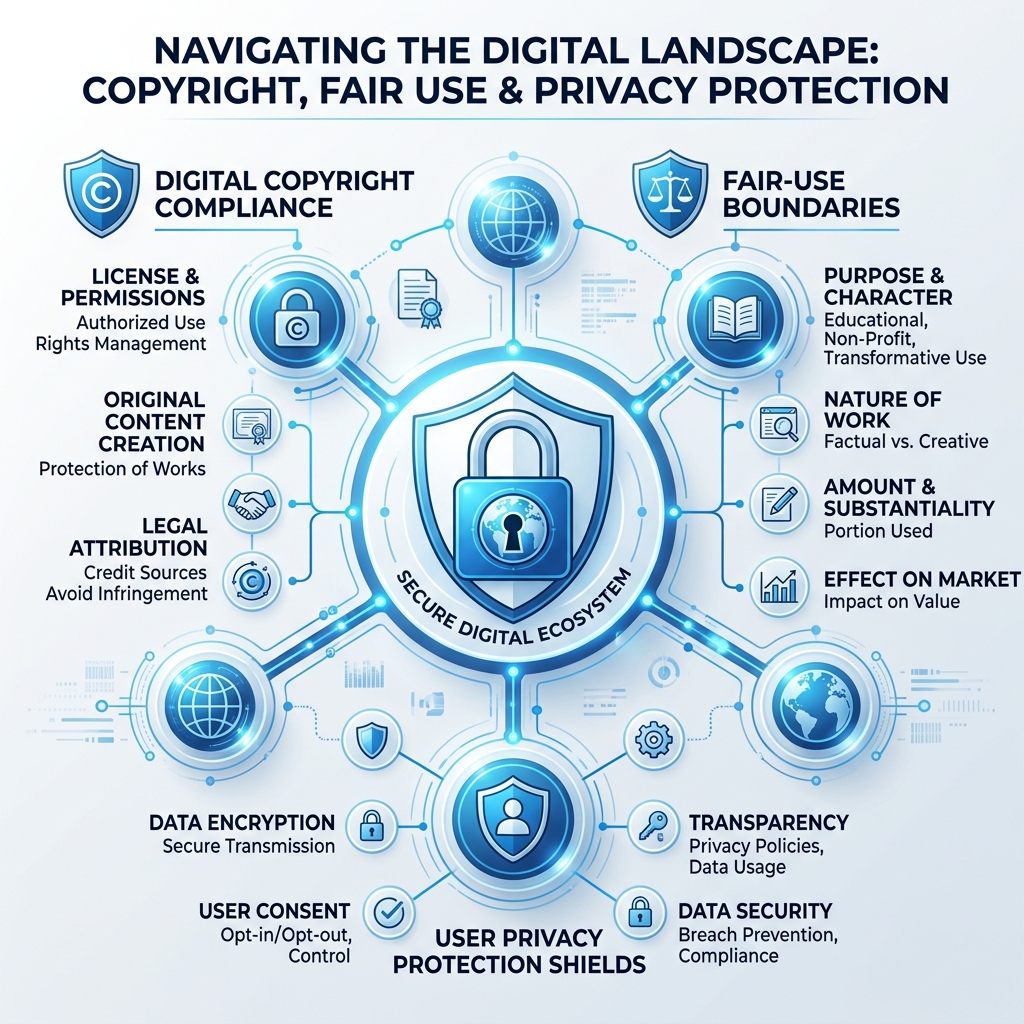 Digital Copyright, Fair Use and Privacy Infographic
2. Platform Terms of Services (ToS) vs. Civil Law
Platform terms of services are private contracts between you and the social platform (e.g., TikTok, Meta). Downloading videos using automated scrapers technically violates the platform's ToS. However, this is a civil contract violation rather than a criminal statute offense, and primarily affects account ban actions rather than private consumer lookups.
Because TopVideoDownloader acts as a stateless intermediary, users can resolve links anonymously without account bindings.
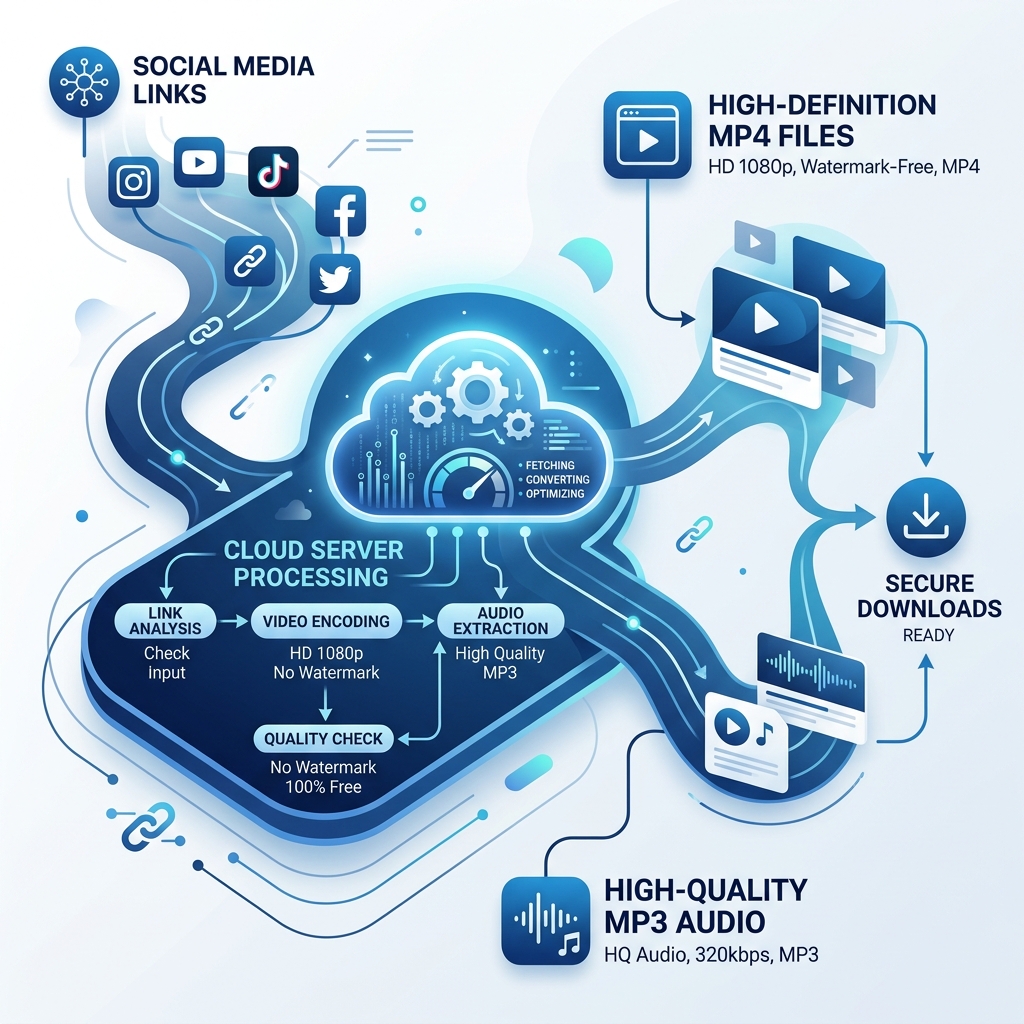 Stateless Intermediary Cloud Scraper Pipeline
3. Practical Storage and Audio Formats
Ensuring that you match container options for legal personal backups ensures that you do not waste system storage bandwidth when collecting learning loops.
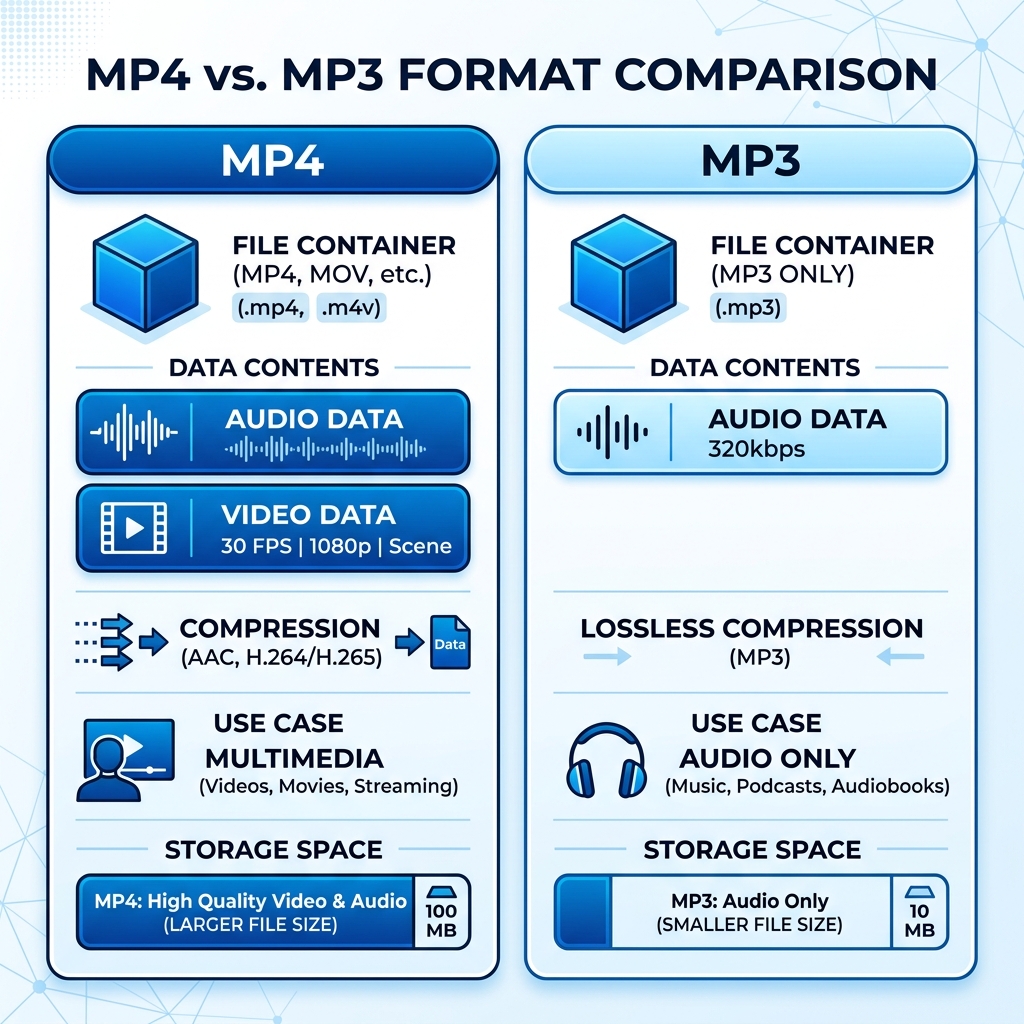 Audio & Video Compression Codec Sizing